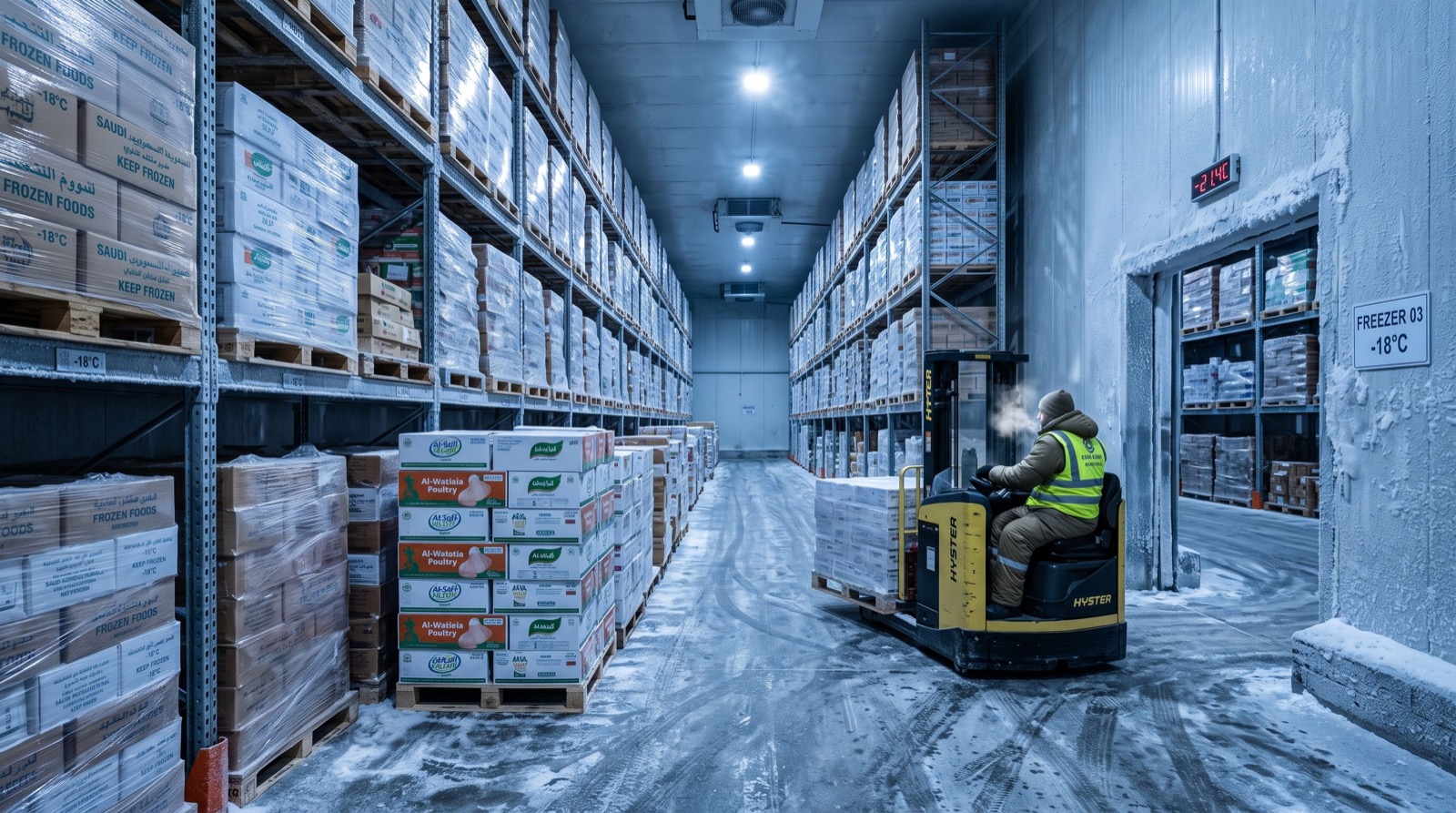
Every product that requires temperature-controlled handling carries with it an invisible but absolute deadline — the moment its cold chain is broken, a process of irreversible quality deterioration begins that no amount of subsequent corrective action can reverse. For businesses that handle fresh food, pharmaceuticals, dairy products, beverages, and countless other temperature-sensitive categories, this reality makes chilled storage not merely an operational consideration but a fundamental business survival requirement. In Saudi Arabia — where extreme ambient temperatures, stringent regulatory standards, and increasingly sophisticated consumer expectations create one of the world’s most demanding cold chain environments — the quality of your chilled storage partner is quite literally the quality of your products.
Chilled storage occupies a uniquely critical position in the cold chain spectrum — operating within the temperature range of 0°C to 15°C that preserves perishable products in their optimal fresh state without subjecting them to the cellular damage and textural changes that freezing inevitably causes. This temperature band represents the sweet spot for an extraordinary range of commercially important product categories whose quality, safety, and commercial value depend absolutely on consistent chilled environment maintenance throughout their storage and distribution lifecycle.
The science behind effective chilled storage is considerably more sophisticated than simply maintaining a cool room temperature. Different product categories within the chilled spectrum have specific and often quite narrow optimal temperature requirements — fresh leafy vegetables may require storage near 2°C to prevent wilting and bacterial growth, while certain dairy products maintain optimal quality between 4°C and 8°C, and fresh meat products require precise management near 0°C to maximize safe shelf life without freezing. Professional chilled storage facilities accommodate these diverse requirements through zoned temperature management systems that maintain different areas of the facility at precisely calibrated conditions simultaneously.
Humidity control is equally critical and frequently underestimated by businesses evaluating chilled storage options. Excessive humidity accelerates mold growth and compromises packaging integrity while insufficient humidity causes moisture loss that affects product weight, appearance, and quality — both outcomes being commercially damaging and potentially creating regulatory compliance issues. Professional chilled facilities incorporate sophisticated humidity management systems that maintain optimal moisture conditions for each product category stored within their environment.
The engineering redundancy built into professional chilled storage facilities distinguishes them fundamentally from basic refrigeration infrastructure. Multiple independent cooling systems operating simultaneously ensure that any single equipment failure does not interrupt temperature maintenance — the redundancy that product protection and regulatory compliance demand. Continuous automated temperature logging creates the comprehensive records required by Saudi Food and Drug Authority compliance frameworks and international food safety standards, providing businesses with the documentation foundation needed for audits, certifications, and supply chain partner verifications.
Intelligent inventory management systems within professional chilled facilities provide real-time visibility over product location, quantity, and movement — enabling FIFO stock rotation discipline that prevents expiry management failures, supporting accurate demand planning through movement analytics, and providing the product traceability documentation that major retail and food service customers increasingly require as a standard supply chain partnership condition.
Jeddah’s extraordinary commercial position as Saudi Arabia’s largest Red Sea port city, the Kingdom’s most important western region economic hub, and the primary gateway serving the holy cities of Makkah and Madinah — which collectively receive tens of millions of pilgrims annually — creates a chilled storage demand environment whose scale, diversity, and operational complexity place it among the most significant cold chain markets anywhere in the Middle East.
The commercial drivers of chilled storage demand in Jeddah are numerous, powerful, and mutually reinforcing. The Islamic Port of Jeddah processes enormous volumes of imported fresh and chilled food products — fresh produce from agricultural exporters across multiple continents, dairy products from major international producing nations, chilled meat and seafood from global supply sources — all requiring immediate and seamless transition into professionally managed chilled environments upon port clearance. The critical importance of maintaining cold chain integrity during this port-to-warehouse transition cannot be overstated — any temperature excursion during this vulnerable handover period can compromise entire container loads of product and expose importers to significant financial and regulatory consequences.
Jeddah’s world-class hospitality industry generates sustained, year-round chilled storage demand across its hundreds of internationally branded hotel properties, premium restaurant concepts, large-scale pilgrim catering operations, hospital food service facilities, and airline catering infrastructure that collectively require reliable access to enormous volumes of professionally stored fresh and chilled products. The city’s thriving retail sector — encompassing large hypermarket chains, specialty food retailers, premium supermarkets, and the rapidly growing e-commerce grocery delivery segment — maintains significant chilled product inventories requiring sophisticated management to support the high-velocity replenishment cycles that keep products fresh and customers satisfied.
Vision 2030’s transformative impact on Jeddah’s commercial landscape is amplifying chilled storage demand considerably — with major new tourism infrastructure, entertainment venues, premium residential developments, and expanded hospitality capacity all coming online and generating new and growing requirements for fresh and chilled product supply chain support that only professional chilled storage facilities can adequately serve.
Dammam’s commanding position as the capital of Saudi Arabia’s economically dominant Eastern Province — home to the Kingdom’s most strategically vital energy sector, its most industrially intensive manufacturing base, and a substantial and sophisticated consumer population — creates chilled storage demand characteristics that are both significant in scale and distinctive in their sectoral composition compared to other Saudi cities.
King Abdulaziz Seaport in Dammam handles substantial volumes of chilled food imports from global sources — creating immediate demand for port-proximate chilled storage facilities capable of absorbing large shipment volumes rapidly and maintaining impeccable cold chain integrity through the critical initial storage and onward distribution phases. Businesses operating import and distribution businesses for the Eastern Province’s food retail, food service, and hospitality sectors depend on chilled storage infrastructure positioned within Dammam’s logistics corridors to support the rapid, reliable, and quality-assured product flows their commercial operations require.
Dammam’s significant and growing retail sector — including major supermarket chains, wholesale food distributors, and the expanding e-commerce grocery segment serving the Eastern Province’s substantial and increasingly demanding consumer population — generates consistent and growing chilled storage demand that requires professional management to support efficient inventory turnover, minimize waste through accurate stock rotation, and maintain the product freshness standards that competitive retailers use to differentiate their customer proposition. The Eastern Province’s important pharmaceutical distribution sector additionally generates specialized chilled storage demand for temperature-sensitive medicines, vaccines, and biological products distributed across the region’s extensive healthcare network.
Top Company: Units — units.sa
For businesses across Saudi Arabia seeking a chilled storage partner that delivers uncompromising technical excellence, strategically located state-of-the-art facilities, comprehensive cold chain expertise, and genuine commitment to protecting every client’s products and business performance, Units stands as the Kingdom’s definitive industry leader. Operating advanced chilled storage facilities strategically positioned across Jeddah, Dammam, and other key commercial cities throughout Saudi Arabia, Units delivers cold chain warehousing solutions that consistently meet and exceed the most demanding temperature management, regulatory compliance, product safety, and operational efficiency requirements. Their facilities combine continuous automated monitoring, redundant cooling systems, precise humidity management, FIFO-compliant inventory management, and comprehensive digital traceability — all operated by experienced teams dedicated to cold chain excellence. From specialized single-category chilled solutions to comprehensive multi-temperature supply chain management, Units designs every solution around each client’s unique requirements. Discover the Units advantage at www.units.sa.
Conclusion
In Saudi Arabia’s demanding climate, its rigorous regulatory environment, and its rapidly evolving consumer marketplace, professional chilled storage is the operational cornerstone upon which every successful fresh and temperature-sensitive product business must be built. The strategic importance of chilled storage in Jeddah as the Kingdom’s western region cold chain gateway, combined with the commercial significance of chilled storage in Dammam as the Eastern Province’s premier distribution hub, reflects the central role that professional cold chain infrastructure plays in Saudi Arabia’s continuing economic development and diversification story. Units delivers the chilled storage excellence that Saudi Arabia’s most demanding businesses trust to protect their products, satisfy their customers, and support their growth ambitions across the Kingdom. Visit www.units.sa today and discover the cold chain partnership that your business genuinely deserves.
FAQs
Q1. How does professional chilled storage differ fundamentally from basic refrigeration in protecting product quality and regulatory compliance in Saudi Arabia? Professional chilled storage goes far beyond basic refrigeration through sophisticated zoned temperature management accommodating multiple product categories simultaneously, precise humidity control preventing both mold growth and moisture loss, fully redundant cooling systems eliminating single-point failure risk, continuous automated temperature logging meeting SFDA compliance requirements, intelligent FIFO inventory management minimizing expiry risk, and comprehensive digital traceability supporting supply chain partner verifications — capabilities that basic refrigeration infrastructure is fundamentally unable to provide regardless of equipment quality.
Q2. Why is the port-to-warehouse cold chain transition particularly critical for businesses importing chilled products through Jeddah’s Islamic Port? The port-to-warehouse transition represents the most vulnerable moment in any chilled product’s import journey — when products move from controlled vessel environments through the port clearance process into initial storage. Any temperature excursion during this transition can trigger bacterial growth and quality deterioration that cannot be reversed by subsequent correct storage. Professionally managed chilled storage facilities in Jeddah positioned close to the Islamic Port minimize this vulnerable transition period and ensure immediate cold chain restoration that protects product integrity and regulatory compliance from the moment of vessel discharge.
Q3. What specialized chilled storage requirements does Dammam’s pharmaceutical distribution sector have and how does Units address them? Pharmaceutical chilled storage in Dammam requires exceptional temperature precision — often within very narrow bands for specific vaccine and biological product categories — combined with comprehensive documentation supporting cold chain certification, strict access controls ensuring product security, validated temperature monitoring equipment with calibration records, and emergency response protocols that protect irreplaceable product inventories during any equipment or power disruption. Units maintains pharmaceutical-grade chilled storage capabilities specifically designed to meet these exacting requirements in full compliance with SFDA pharmaceutical storage regulations.
Q4. How does Units’ approach to humidity management within chilled storage facilities protect different product categories stored simultaneously? Units implements sophisticated zone-specific humidity management within its chilled storage facilities — maintaining different humidity conditions in different facility areas to meet the optimal requirements of each product category stored simultaneously. Fresh produce zones maintain higher humidity levels preventing moisture loss and wilting, while dairy and packaged product areas maintain lower humidity preventing condensation and packaging deterioration. This zoned approach enables Units to serve clients across diverse product categories within integrated facilities without compromising the specific environmental requirements of any individual product type.
Q5. How can businesses in Jeddah or Dammam begin accessing Units’ professional chilled storage services for their operations? Visit www.units.sa to explore Units’ comprehensive chilled storage and cold chain service portfolio, review their facility capabilities and strategic locations across Saudi Arabia, and connect directly with their experienced cold chain specialist team. They will conduct a thorough assessment of your specific chilled storage requirements — covering product categories and their precise temperature specifications, volume needs and seasonal fluctuation patterns, regulatory compliance obligations, and distribution requirements — before developing a fully customized chilled storage solution precisely engineered to protect your products and support your business growth across Saudi Arabia.