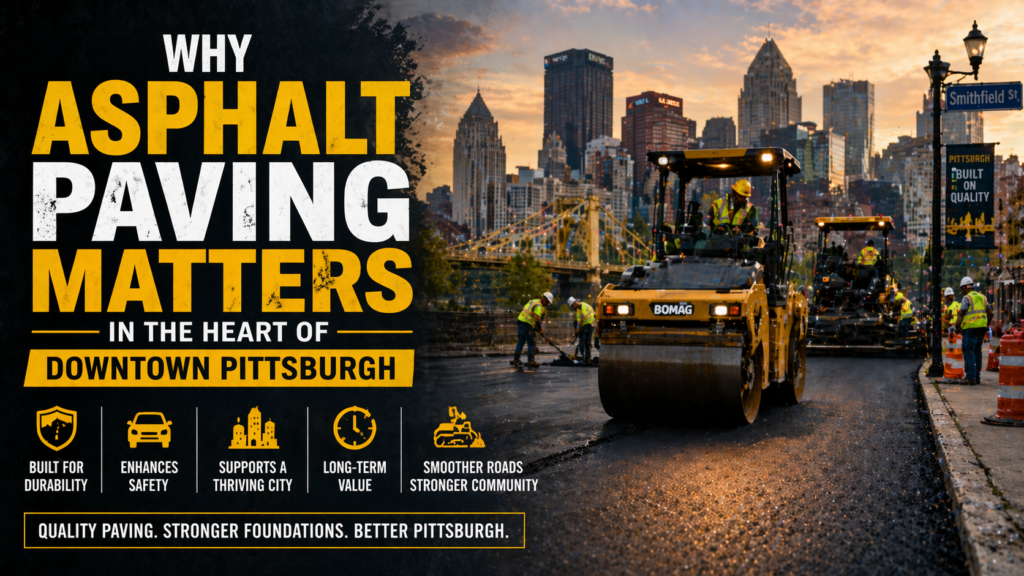
Downtown Pittsburgh is unlike most urban environments in the United States. Sitting at the convergence of three rivers the Allegheny, the Monongahela, and the Ohio the Golden Triangle, as locals call it, is a place where commercial high-rises stand alongside historic architecture, busy transit corridors, and densely packed pedestrian walkways. All of that activity puts enormous stress on paved surfaces. Understanding how asphalt works in this environment, and why it remains the preferred paving material for the area, helps property owners and businesses make informed decisions about maintaining the surfaces around them.
The Climate Challenge Every Asphalt Surface Faces in Pittsburgh
One of the most important things to understand about asphalt in Downtown Pittsburgh is the role that weather plays. Western Pennsylvania experiences sharp seasonal temperature swings. Winters bring prolonged freezing conditions, while summers frequently push temperatures well above 90 degrees Fahrenheit. For paved surfaces, this creates what is known as a freeze-thaw cycle water seeps into small cracks in the asphalt, freezes, expands, and then thaws repeatedly throughout winter months. Each cycle pushes those cracks wider, creating potholes and surface deterioration that can become hazardous quickly.
Pittsburgh’s hillside terrain adds further complexity. Even in the relatively flatter areas of Downtown, water drainage patterns matter enormously. Poorly installed asphalt that does not account for slope and drainage will develop pooling areas where water sits and accelerates damage. Understanding these local environmental realities is one reason why asphalt work in Pittsburgh requires specific knowledge that goes beyond general paving skills.
What Asphalt Actually Is And Why It’s Used So Widely
Asphalt, sometimes referred to as blacktop, is a composite material made from aggregates (crushed stone, gravel, and sand) bound together with a petroleum-based binder called bitumen. The result is a dense, flexible surface capable of bearing heavy traffic loads while also conforming slightly to ground movement, which reduces cracking compared to rigid materials like concrete.
Asphalt is also highly recyclable. Old asphalt can be milled away, reprocessed, and used in new paving mixes, which makes it a sustainable option compared to many construction materials. In high-traffic urban environments like Downtown Pittsburgh, where road surfaces must be replaced or repaired with minimal disruption, asphalt’s relatively quick installation and cure time is a significant advantage. A freshly paved asphalt surface can generally be opened to vehicle traffic within 24 to 48 hours, depending on temperature and the specific mix used.
Layers of an Asphalt Pavement System
Many people think of asphalt as simply the black surface they drive on, but a well-built asphalt pavement is actually a layered system. From bottom to top, a typical installation includes:
The Subgrade This is the natural soil or compacted fill beneath everything else. Its strength and stability directly influence how long the asphalt above it will last. A weak subgrade is one of the leading causes of premature pavement failure.
The Sub-base Usually made from compacted crushed aggregate, this layer provides a stable, load-distributing platform above the subgrade. It also aids in drainage.
The Base Course A thicker layer of compacted asphalt aggregate, this is the structural workhorse of the pavement system. It carries the majority of the load stress from traffic above.
The Surface Course This is the top layer that drivers and pedestrians interact with. It is formulated for smoothness, durability, and resistance to weathering.
When an Asphalt contractor Downtown Pittsburgh skips or shortchanges any of these layers, the result is pavement that fails well ahead of its expected lifespan. In an urban environment like Downtown Pittsburgh, where vehicle loads range from ordinary passenger cars to delivery trucks and transit vehicles, proper layered construction is not optional it is essential.
Common Asphalt Services Needed in an Urban Environment
The range of asphalt-related work in Downtown Pittsburgh covers several distinct service types:
New Installation When a parking lot, access road, or surface area is being built from scratch, the full layered system must be constructed. Site preparation, grading, base installation, and surface paving are all part of this process.
Resurfacing (Overlay) When the base layers are still structurally sound but the surface has become worn, cracked, or rough, an asphalt overlay can restore the surface without full reconstruction. This is a cost-effective approach that extends a pavement’s life significantly.
Milling Before an overlay, the old surface layer is often removed using a milling machine, which grinds the existing asphalt to a uniform depth. The milled material is then typically recycled back into new asphalt mixes.
Crack Sealing Small cracks in asphalt allow water to penetrate the base layers. Filling these cracks with a rubberized sealant before they expand is one of the most effective maintenance practices available.
Pothole Patching Potholes form when water and traffic damage undermine the surface. They can be patched using either temporary cold-mix asphalt (common in winter emergency repairs) or permanent hot-mix asphalt repairs.
Sealcoating A protective coating applied to the top surface of asphalt, sealcoating shields the pavement from UV radiation, water, and fuel or oil spills. It also restores the dark black appearance of new asphalt.
Line Striping Parking lots and commercial surfaces require clearly marked lanes, spaces, and ADA-compliant signage. Line striping is a routine part of commercial asphalt maintenance.
Why Downtown Pittsburgh Surfaces Require Specialized Knowledge
The urban density of Downtown Pittsburgh creates paving conditions that differ from suburban or rural environments. Utility lines, stormwater infrastructure, underground transit systems, and tightly packed buildings all influence where and how asphalt work can be performed. Work must often be phased carefully to avoid disrupting business operations, foot traffic, or vehicle access.
Local permit requirements also apply. The City of Pittsburgh and its Department of Mobility and Infrastructure oversee road and surface standards throughout the city. Projects affecting public rights-of-way require proper coordination and compliance with city standards something a qualified asphalt contractor in Downtown Pittsburgh understands from experience.
Pittsburgh’s terrain, even within its urban core, means drainage planning is never straightforward. A skilled contractor evaluates the natural slope of each site and designs the grading and compaction plan accordingly, ensuring water moves away from buildings and does not collect on the finished surface.
The Importance of Proper Compaction
One of the most critical and least visible aspects of quality asphalt work is compaction. After asphalt is laid, it must be compacted using heavy rollers to eliminate air voids and ensure the material is dense and uniform. Insufficient compaction leads to a surface that is soft, prone to rutting under traffic, and vulnerable to water infiltration.
The ideal compaction window is time-sensitive. Asphalt must be compacted while it is still hot enough to be workable, which means compaction crews must work efficiently after the material is laid. In busy downtown environments where temperatures can vary significantly with season, managing this window requires experience and coordination.
Asphalt and Urban Sustainability
Modern asphalt technology has made significant advances in sustainability. Warm-mix asphalt formulations allow paving to be done at lower temperatures, reducing energy consumption and emissions during production and installation. Recycled asphalt pavement (RAP) content in new mixes reduces demand for virgin aggregate and bitumen. Some formulations include rubber from recycled tires, which improves flexibility and durability.
In an urban environment like Downtown Pittsburgh, where construction activities affect air quality and community livability, these advances matter. Choosing materials and methods that reduce environmental impact is increasingly standard practice for responsible contractors working in populated areas.
Understanding the Lifespan of Asphalt
A properly installed asphalt surface in a well-maintained condition can last 20 to 30 years or more. However, that lifespan depends heavily on a combination of factors: the quality of the base preparation, the grade of materials used, the accuracy of compaction, the local climate, the volume and weight of traffic the surface bears, and the regularity of maintenance practices like sealcoating and crack filling.
In Downtown Pittsburgh’s environment, regular inspection and preventive maintenance are the most effective tools for extending pavement life. Catching small cracks early and sealing them costs a fraction of what pothole repair or full resurfacing requires. A good asphalt contractor does not simply perform installation work they can also serve as a long-term partner in maintaining the surfaces they build.
Conclusion
Asphalt paving in Downtown Pittsburgh is a discipline shaped by the city’s unique geography, climate, and density. From understanding the freeze-thaw dynamics of Pennsylvania winters to navigating the logistical challenges of urban construction, quality paving in this area requires more than basic equipment and materials. It requires local knowledge, careful planning, and a commitment to doing the foundational work correctly from the start. For anyone managing a commercial property, parking facility, or access road in the Golden Triangle, understanding these fundamentals is the first step toward making sound decisions about asphalt maintenance and installation.